What Happens During an In-Home ABA Session? A Walkthrough for Parents
Quick answer
During an in-home ABA session, a therapist comes to your home and works with your child on individualized goals through play and everyday routines like snack, getting dressed, and clean-up. A typical session includes a warm-up to build rapport, short teaching moments built into activities your child enjoys, breaks, ongoing data collection, and a brief check-in with the parent at the end.
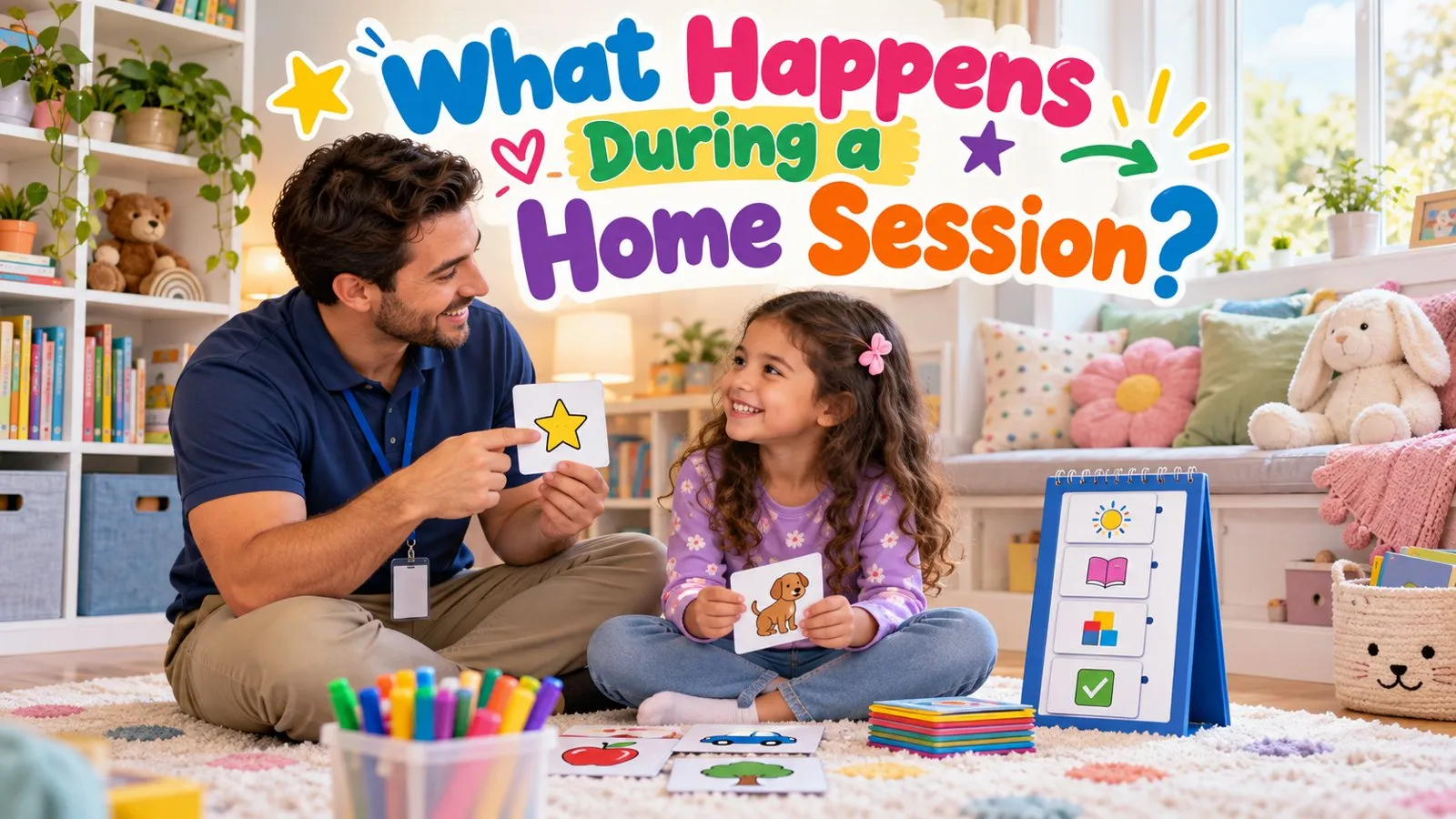
During an in-home ABA session, a trained therapist comes to your home and works with your child on individualized goals, mostly through play and the routines your family already has, like snack time, getting dressed, or cleaning up toys. A typical session includes a warm-up to build rapport, short teaching moments woven into activities your child enjoys, breaks, ongoing data collection, and a quick check-in with you at the end.
Key takeaways
- In-home sessions often look like guided play, with teaching built into real household routines.
- A Registered Behavior Technician (RBT) often runs sessions, supervised by a Board Certified Behavior Analyst (BCBA) who designs the plan.
- Therapists record data throughout the session so the BCBA can see what is working and adjust.
- A parent or caregiver is usually home during sessions and is coached to practice skills between visits.
- Session length varies by child and is based on assessment, goals, and insurance authorization.
Who comes to your home for an ABA session?
Most ABA programs use a team approach. A Board Certified Behavior Analyst holds a graduate-level certification in behavior analysis. The BCBA completes the assessment, writes your child’s goals, and designs the teaching plan.
Day-to-day home sessions are often led by a Registered Behavior Technician, who helps deliver services under the direction and close supervision of a qualified supervisor. The BCBA also visits regularly to watch sessions, coach the RBT, train parents, and update the plan.
You are part of the team too. Your observations about what your child loves, what upsets them, and what happens between sessions shape the plan. For a refresher on the basics, read our overview of how ABA therapy works.
How is an in-home ABA session structured?
Every program is different, but many home sessions follow a similar rhythm:
- Arrival and check-in. The therapist greets your child and asks you for a quick update.
- Pairing and play. Low-pressure play to build trust and find out what motivates your child today.
- Teaching built into activities. Short learning moments during play, snack, or routines.
- Breaks and movement. Scheduled and requested breaks, often in your child’s favorite spot.
- Routine practice. Working on goals like hand washing, clean-up, or getting shoes on, at the place it really happens.
- Parent check-in. A short summary of how the session went and one thing to try before next time.
Data collection happens throughout, not just at the end.
A sample in-home ABA session for a preschooler
The walkthrough below is illustrative only. “Maya” is a fictional composite, not a real child, and every child’s program is different. Her goals, activities, and timing are examples of what a home session might include, not a template your child will follow.
Maya is four. Her goals include asking for things she wants using two-word phrases, taking turns in a simple game, following one-step directions during routines, washing her hands with less help, and moving between activities with less distress. Her home session in this example lasts about two hours in the afternoon.
Arrival and settling in
The therapist rings the doorbell, and Maya’s dad answers. The therapist greets Maya at her level, uses her name, and offers a choice right away: “Bubbles or cars?” Maya points to the cars.
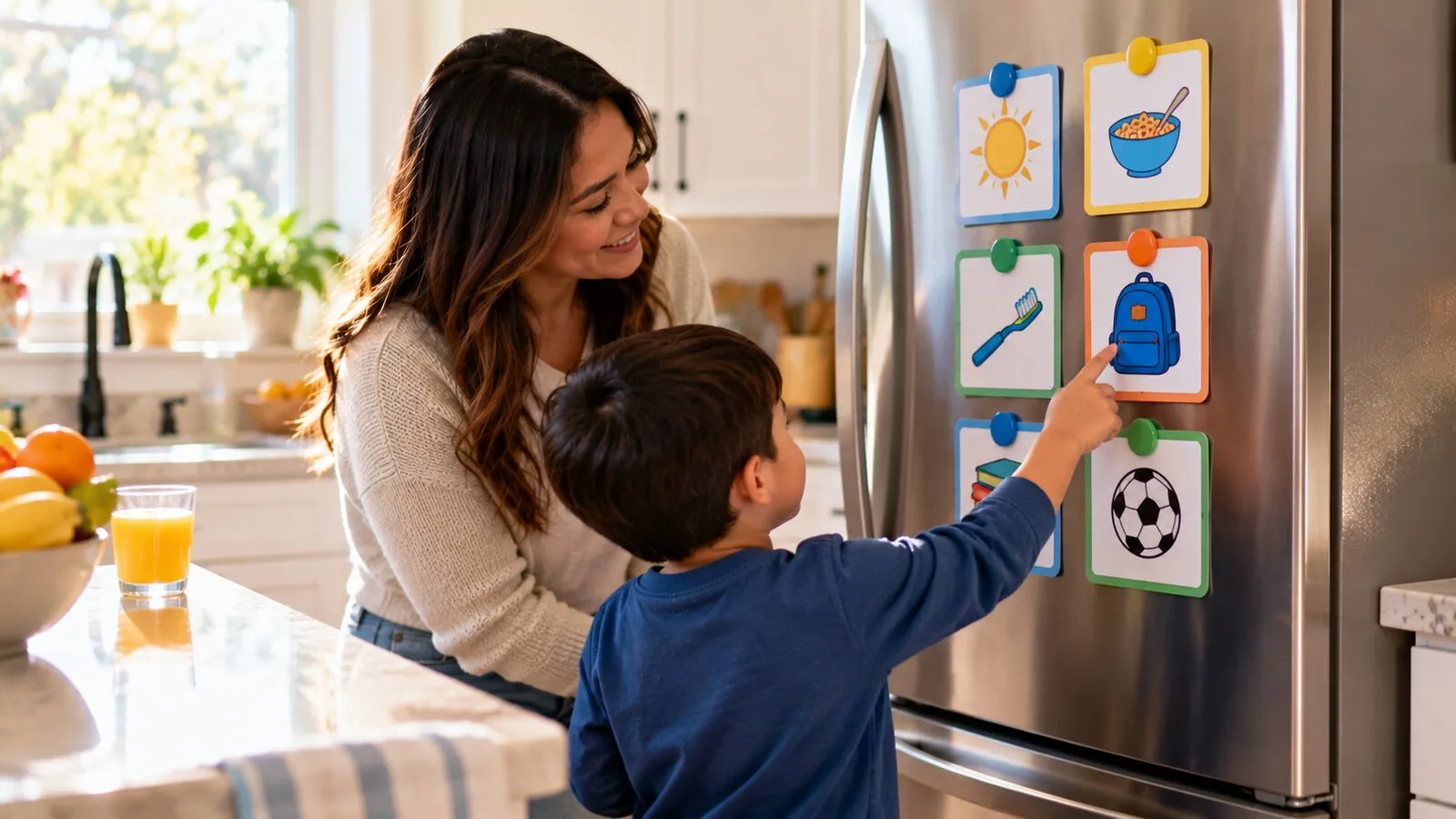
A small visual schedule is taped to the living-room wall. It shows pictures of the session’s main parts: play, table game, snack, wash hands, outside, goodbye. Knowing what comes next helps many children feel more settled.
Dad shares a quick update. Maya slept poorly and has been saying “more” a lot this week. The therapist notes both. A tired day may mean a slower pace and more breaks.
Pairing and building rapport
The first stretch of the session is mostly play with very few demands. In ABA, this is often called pairing: the therapist becomes associated with fun, comfort, and good things.
The therapist follows Maya’s lead on the living-room rug. She rolls Maya’s own cars down a cushion ramp, makes silly crash sounds, and hands Maya her favorite car. There are no quizzes yet. The goal is for Maya to enjoy this time and trust this person.
Good therapists return to pairing whenever a child seems uneasy, not only on the first day.
Activities and teaching built into play
This is where much of the learning happens, and to a parent it may simply look like playing. The therapist creates small, natural chances for Maya to practice her goals, using toys and objects from her home.
- Requesting: The therapist holds Maya’s toy cow just out of reach and waits. Maya says “cow.” The therapist models “want cow,” and when Maya repeats it, hands it over right away with enthusiasm.
- Turn-taking: Maya’s older brother joins for a few minutes. They roll a ball back and forth. The therapist says “my turn,” then “your turn,” and praises Maya for waiting.
- Following directions: “Put the pig in the barn.” Maya does it, and the pig makes a loud oink.
Each of these is a learning opportunity, sometimes called a trial. The CDC describes several ABA teaching styles. Discrete Trial Training uses step-by-step instructions, while Pivotal Response Training takes place in a natural setting. Home sessions often lean on natural teaching, with short, more structured moments when they help.
Later, Maya sits at the kitchen table for a short picture-card game: a clear instruction, a chance to respond, and quick feedback. It lasts only a few minutes before she earns a play break.
Everyday routines: snack and hand washing
One advantage of in-home ABA is that routines happen where they really happen. Before snack, the therapist and Maya go to the bathroom sink. Using a picture strip of the steps, Maya turns on the water, wets her hands, and pushes the soap pump. The therapist gives a light prompt for rubbing and rinsing, then lets Maya dry her hands on her own towel.
At the kitchen table, Maya practices asking for “more crackers” and opening her own container. Dad watches, and the therapist points out how she waits a few seconds before helping. Our guide to ABA in everyday family routines has more examples.
Breaks and transitions
Maya takes regular breaks. In this example, one of her goals is to ask for a break using a picture card or the word “break” instead of dropping to the floor. When she asks, she gets one. That teaches her that communicating works.
Transitions can be hard for many autistic children, and home has plenty of them: from the TV, from the backyard, from a favorite toy. The therapist gives a warning (“two more turns, then snack”), points to the visual schedule, and lets Maya carry a small toy with her.
Data collection throughout the session
You will probably notice the therapist writing notes or tapping on a tablet. They are recording data, such as how many times Maya asked for something using two words, how much help she needed at the sink, and how transitions went.
Data is how the BCBA knows whether a goal is on track, when to raise the challenge, and when to try a different approach. Therapists also note your child’s mood and any time your child says “no” or pulls away. The BACB ethics codes guide behavior analysts’ professional conduct, and paying attention to a child’s assent, meaning their signs of willingness to take part, is part of treating children with dignity.
The parent check-in
At the end, the therapist spends a few minutes with Maya’s dad. They share a short summary: Maya used “want cow” and “more crackers” several times, took three turns with her brother, washed her hands with one prompt, and had one tough transition before snack.
They also suggest one thing to try before the next visit, such as waiting a few seconds before handing Maya a snack so she has a chance to ask. More ideas are in supporting ABA therapy at home.
What goals are worked on during home sessions?
Goals come from your child’s assessment and your family’s priorities. In a home setting, common goal areas include:
| Goal area | Example of what it might look like at home |
|---|---|
| Communication | Asking for a snack, a toy, help, or a break |
| Social skills | Taking turns with a sibling, greeting a family member at the door |
| Daily living | Hand washing, putting on shoes, clearing a plate |
| Following directions | “Put your cup in the sink,” “Bring me your shoes” |
| Flexibility and transitions | Turning off the tablet when the timer ends, moving from play to bath |
| Play | Trying a new toy or joining a simple pretend game |
Your child’s BCBA should explain each goal in plain language and how progress will be measured.
How does the therapist interact with your child and family?
At home, the therapist is a guest in your space, and good teams act like it. They follow your house rules, keep materials organized, and respect your routines and privacy.
With your child, the tone should feel warm and playful. Expect lots of praise, choices, and patience. A pause before helping is often on purpose; it gives your child a chance to communicate or try on their own. Brief frustration can happen when learning something new, but your child should not be distressed for long, and the team should respond with care.
With you, the therapist should be open about what they are doing and why. If something you see concerns you, ask about it. A good team will explain its approach and listen to your input.
What is the parent’s role during in-home ABA?
Do parents need to be present?
Most in-home programs ask that a parent or another responsible adult stay home for the whole session. You do not have to sit on the rug the entire time. Many parents fold laundry or work nearby, then join for coaching moments and the check-in. Ask your provider about its exact policy.
How parents take part
- Share updates. Sleep, illness, new words, or a hard morning all help the therapist plan the session.
- Watch and learn. The therapist may model a strategy, then invite you to try it while they give feedback.
- Practice between sessions. One or two small strategies, used consistently, can help skills carry over to the rest of the week.
- Tell the team what matters. If bedtime or trips to the store are the hardest part of your day, say so. Goals should fit your real life.
Many families also take part in parent training, where a BCBA coaches caregivers more directly.
How long is an in-home ABA session?
There is no single standard length. Some children have shorter sessions of an hour or two; others have longer blocks that include meals or rest. Your child’s BCBA recommends a schedule based on the assessment, your child’s age and goals, your family’s routines, and what your insurance plan authorizes. Hours often change as goals are met. Our guide to how long ABA therapy lasts covers duration over months and years.
If you are weighing home sessions against a center, see center-based vs. in-home ABA therapy.
How to prepare for your child’s first home session
- Share motivators ahead of time. Tell the team about favorite toys, shows, songs, and snacks.
- Pick a play space. A clear spot on the floor with a few favorite toys is often enough.
- Preview the visit. Show your child a photo of the therapist, or make a simple picture story: “Ms. T comes to play. Then we have snack.”
- Keep communication tools handy. If your child uses an AAC device, picture cards, or signs, show the team how your child uses them.
- Expect an adjustment period. The first week or two may focus mostly on rapport. That is time well spent.
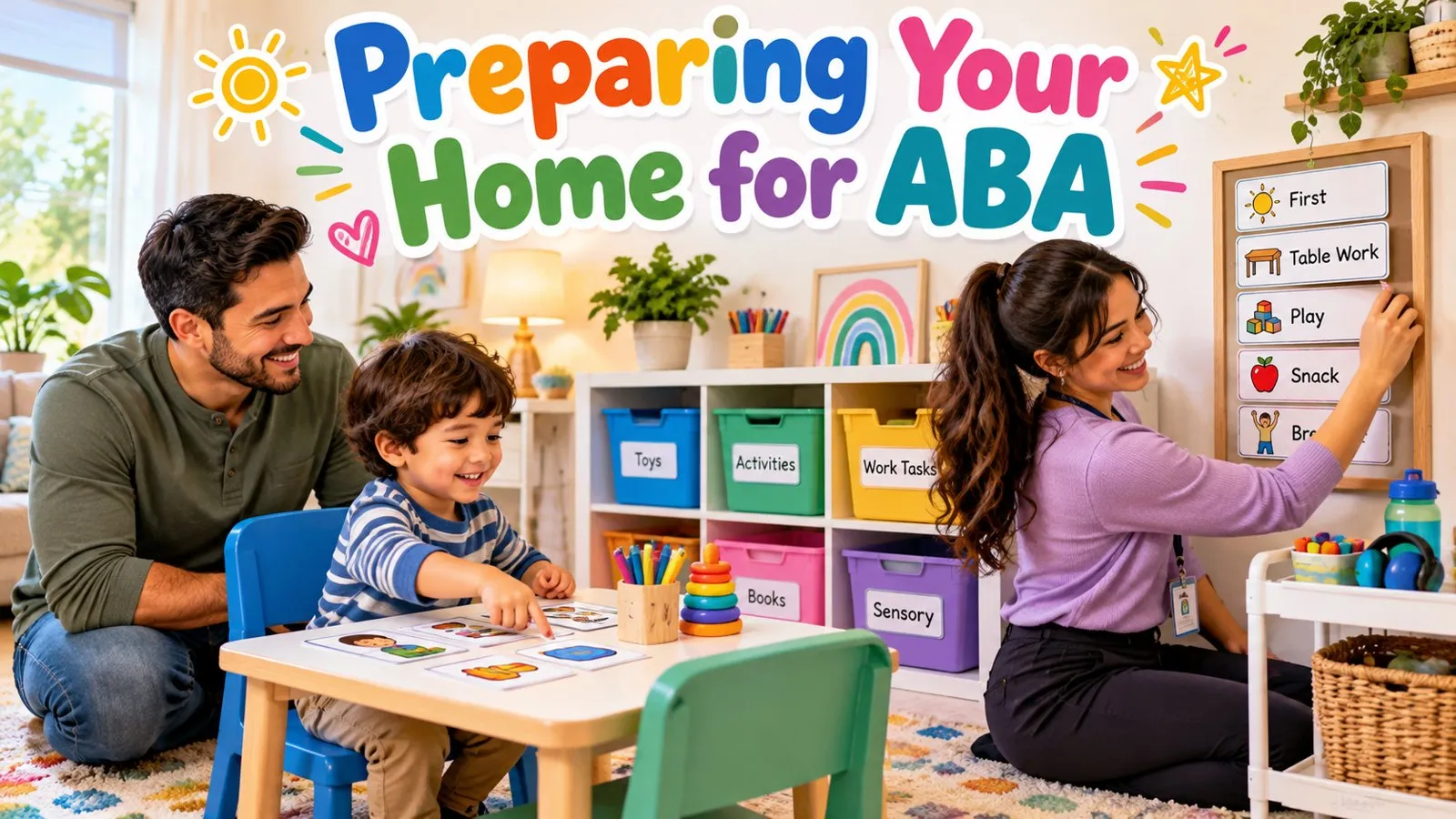
Our checklist for preparing your home for ABA covers space, supplies, siblings, and pets. If you have questions about your child’s development, talk with your pediatrician or a qualified professional about your child’s specific needs.
Next steps
If you are thinking about in-home ABA and want to know what sessions would look like for your family, we are happy to walk you through it. United Autism Therapy offers BCBA-supervised in-home ABA therapy across Orange County, and we offer a free consultation. Call us at (714) 709-7819 or contact our team to set up a time to talk.
Frequently asked questions
Do I have to be home during my child's in-home ABA session?
In most in-home programs, a parent or another responsible adult is expected to be home for the whole session. You do not need to sit beside your child the entire time, but being nearby lets you join coaching moments and helps the team keep things safe. Ask your provider about its specific policy before sessions start.
Can siblings be around during in-home ABA?
Often, yes. Siblings can be a natural part of social goals, like taking turns or sharing a toy. At other times, the therapist may need a quieter space with fewer distractions. Talk with your child's BCBA about when siblings can join and when a little separation helps.
What should I have ready before the therapist arrives?
A clear area to work and play, a few of your child's favorite toys or snacks, and any communication tools your child uses are a good start. Let the team know about pets, food restrictions, or anything that changed since the last visit, like a poor night's sleep.
What if my child cries or refuses to take part at first?
Many children need time to adjust to a new person, even at home. A good team slows down, spends more time on play and rapport, and watches closely for your child's signs of comfort or distress. Tell the BCBA what usually helps your child feel calm.
Will every in-home session look the same?
Sessions usually follow a predictable rhythm, but activities, goals, and pace change as your child learns. The BCBA reviews session data and updates the plan, so what you see in month one will likely look different from what you see a few months later.
References
- Treatment and Intervention for Autism Spectrum Disorder — Centers for Disease Control and Prevention
- Board Certified Behavior Analyst (BCBA) — Behavior Analyst Certification Board
- Registered Behavior Technician (RBT) — Behavior Analyst Certification Board
- Ethics Codes — Behavior Analyst Certification Board
This article is for general education and is not medical advice. Every child is different — please talk with your child’s pediatrician or a qualified professional about your child’s needs. Read our medical disclaimer.