What Is ABA Therapy? A Clear Guide for Parents
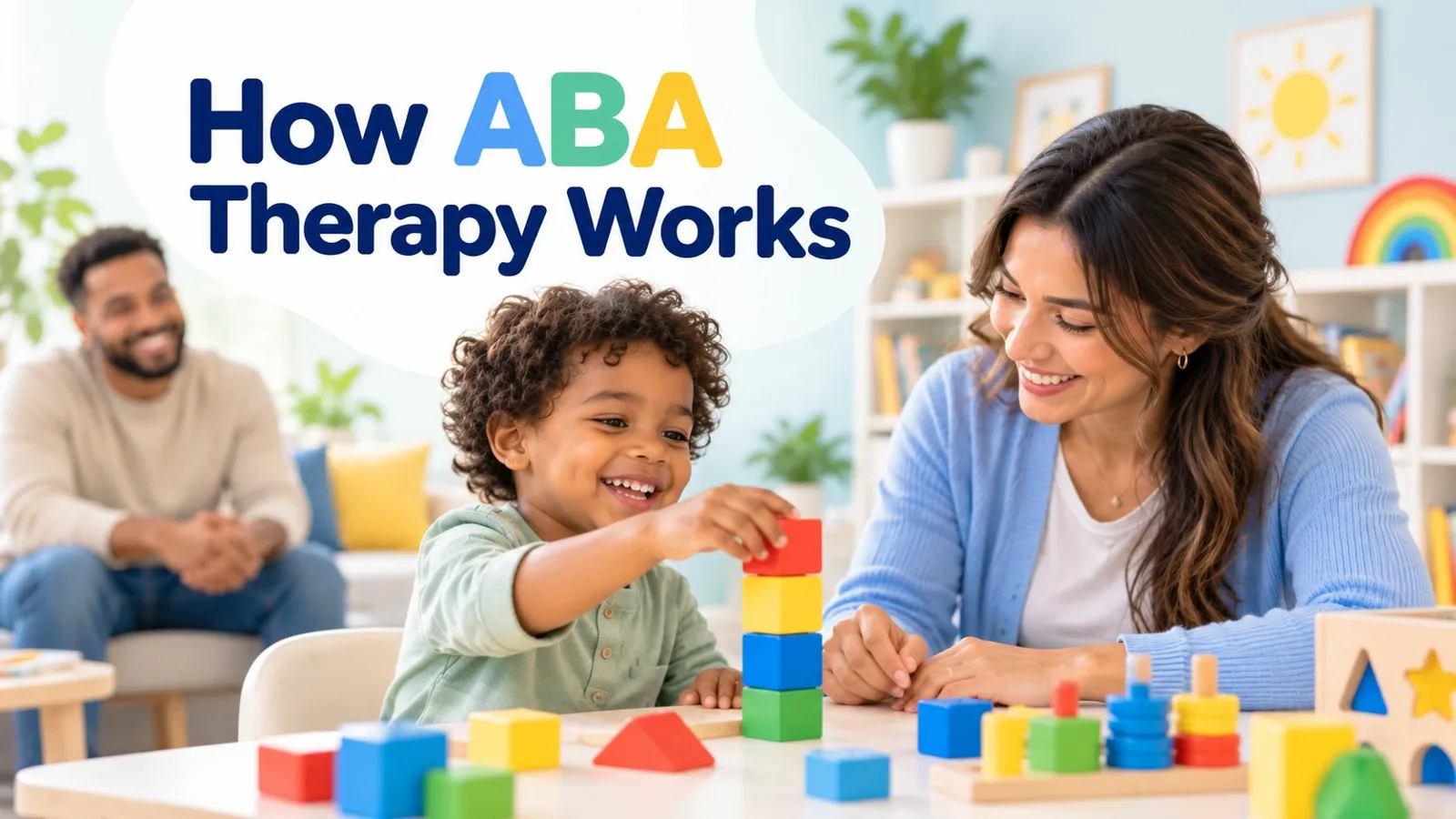
ABA therapy is a way of teaching skills that uses the science of how people learn and behave. ABA stands for applied behavior analysis. For children with autism, it usually means working one-on-one with a trained therapist on everyday goals, like asking for help, taking turns, getting dressed, or staying safe in a parking lot, using praise, play, and other rewards that matter to your child.
Key takeaways
- ABA stands for applied behavior analysis, the science of how behavior is learned and changed.
- It teaches useful skills by breaking them into small steps and rewarding progress.
- A Board Certified Behavior Analyst (BCBA) designs the plan, and Registered Behavior Technicians (RBTs) often deliver sessions under supervision.
- Modern ABA is often play-based, follows your child’s interests, and pays close attention to your child’s comfort and consent.
- Every program should be individualized. There is no single ABA script that fits every child.
What does ABA stand for?
ABA stands for applied behavior analysis. Each word tells you something:
- Applied means the work focuses on skills that matter in real life, not lab exercises.
- Behavior means anything a person does that can be observed, such as talking, pointing, eating, playing, or crying.
- Analysis means the team looks carefully at what is happening, collects information, and uses it to make decisions.
The Behavior Analyst Certification Board (BACB) describes behavior analysis as “the science of behavior.” It explains that ABA techniques generally involve teaching more effective ways of behaving through positive reinforcement. In other words, the focus is on teaching and encouraging, not on punishment.
ABA therapy in simple terms
Here is the simplest way to think about it. Your child’s therapist figures out what your child wants to be able to do, breaks that skill into small, doable pieces, and celebrates each step forward in a way your child enjoys.
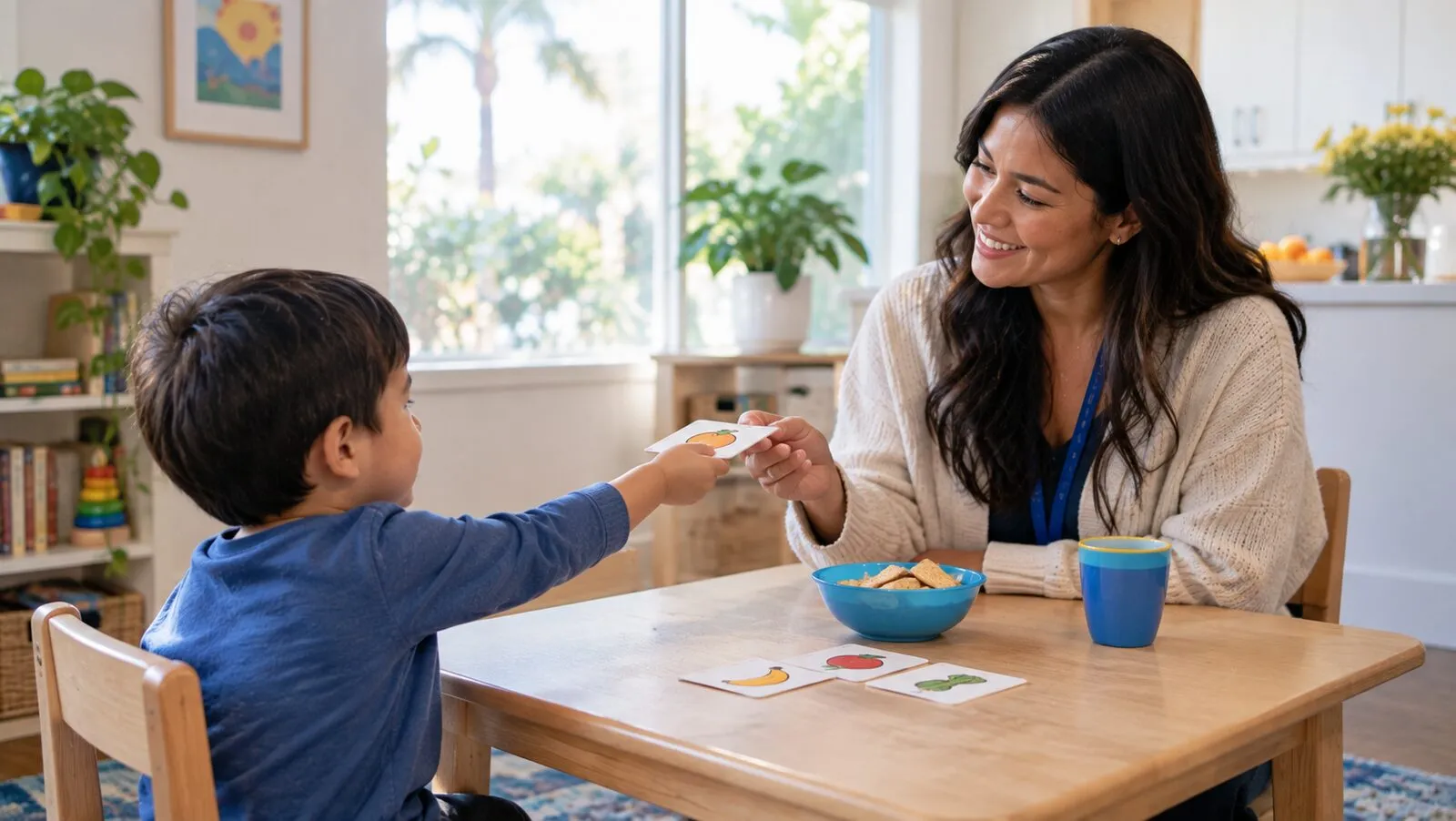
Picture a three-year-old who grabs toys from a sibling. An ABA therapist might teach a quick, easy way to ask instead, such as saying “my turn,” using a picture card, or tapping a button on a speech device. Each time your child asks, they get the toy right away. Over time, asking works better than grabbing, so asking happens more often.
That is the heart of ABA: help your child find an easier, more effective way to get what they need.
The basic principles behind ABA
You do not need to become an expert in behavior science to support your child. But a few ideas come up often, and knowing them makes it easier to follow along in team meetings.
Positive reinforcement
Reinforcement means something that follows a behavior and makes it more likely to happen again. For one child, that might be a high-five. For another, it might be a few minutes with a favorite spinning toy or a bite of a snack. The team learns what motivates your child and uses it to encourage new skills.
Looking at what happens before and after a behavior
ABA teams often use what is called the ABC model: the antecedent (what happens right before), the behavior itself, and the consequence (what happens right after). The CDC describes behavioral approaches as ones that focus on changing behaviors by understanding what happens before and after the behavior.
For example, if your child melts down every time the tablet is turned off, the team looks at the whole picture. Was there a warning? Did your child know what was coming next? Changing what happens before a hard moment, such as using a visual timer, is often just as important as what happens after.
We explain the ABC model, prompting, and other techniques in more depth in our guide to how ABA therapy works.
Breaking skills into small steps
Many everyday tasks are really a chain of smaller steps. Handwashing, for instance, includes turning on the water, wetting hands, getting soap, rubbing, rinsing, and drying. ABA teaches one step at a time and links them together, so your child can feel success along the way.
Measuring progress
ABA relies on data. Therapists record things like how often your child uses a new word or how much help they needed to finish a task. The CDC notes that in ABA, progress is tracked and measured. This lets the team see what is working and change what is not, rather than guessing.
Who provides ABA therapy?
ABA is usually delivered by a team. Two credentials you will hear about often come from the BACB.
| Role | What the credential means | What they usually do |
|---|---|---|
| BCBA (Board Certified Behavior Analyst) | A graduate-level certification in behavior analysis | Assesses your child, writes the treatment plan, sets goals, trains parents, reviews data, and supervises the team |
| RBT (Registered Behavior Technician) | A paraprofessional certification for people who practice under close supervision | Works directly with your child in sessions and records data on each goal |
According to the BACB, BCBAs supervise the work of RBTs and other professionals who carry out behavior-analytic plans. That supervision matters. It means someone with advanced training is regularly checking that your child’s program makes sense and is moving in the right direction.
You can look up any behavior analyst’s certification on the BACB website. It is a reasonable question to ask any provider.
What ABA therapy is for: examples of goals
Every child’s goals should be different, because every child is different. That said, goals often fall into a few broad areas. Here are some examples of what goals might look like for real kids:
- Communication: Asking for a snack using words, signs, pictures, or a device. Saying “stop” or “all done” instead of hitting. Answering simple questions.
- Daily living: Brushing teeth, using the toilet, putting on shoes, or sitting for a family meal.
- Social and play skills: Taking turns in a board game, joining a peer at the sandbox, or responding when someone says their name.
- Safety: Holding a hand in a parking lot, staying with a caregiver in a store, or learning to say or show their name and a caregiver’s phone number.
- Learning readiness: Following a short instruction, waiting briefly, or moving from one activity to the next with less stress.
- Reducing barriers to learning: Replacing behaviors that cause harm or get in the way, like head-banging or running off, with safer ways to communicate the same need.
Good goals are specific and measurable. “Improve social skills” is vague. “Takes three turns in a simple game with a peer, with no more than one reminder” is something everyone can see and track.
Want to know what these skill areas can mean for your family? Our article on the benefits of ABA therapy looks at this more closely, including honest limitations.
What modern ABA looks like
If your only picture of ABA is a child at a table doing drills for hours, today’s practice may look quite different. Many programs now blend structured teaching with play and everyday routines.
Play-based and naturalistic teaching
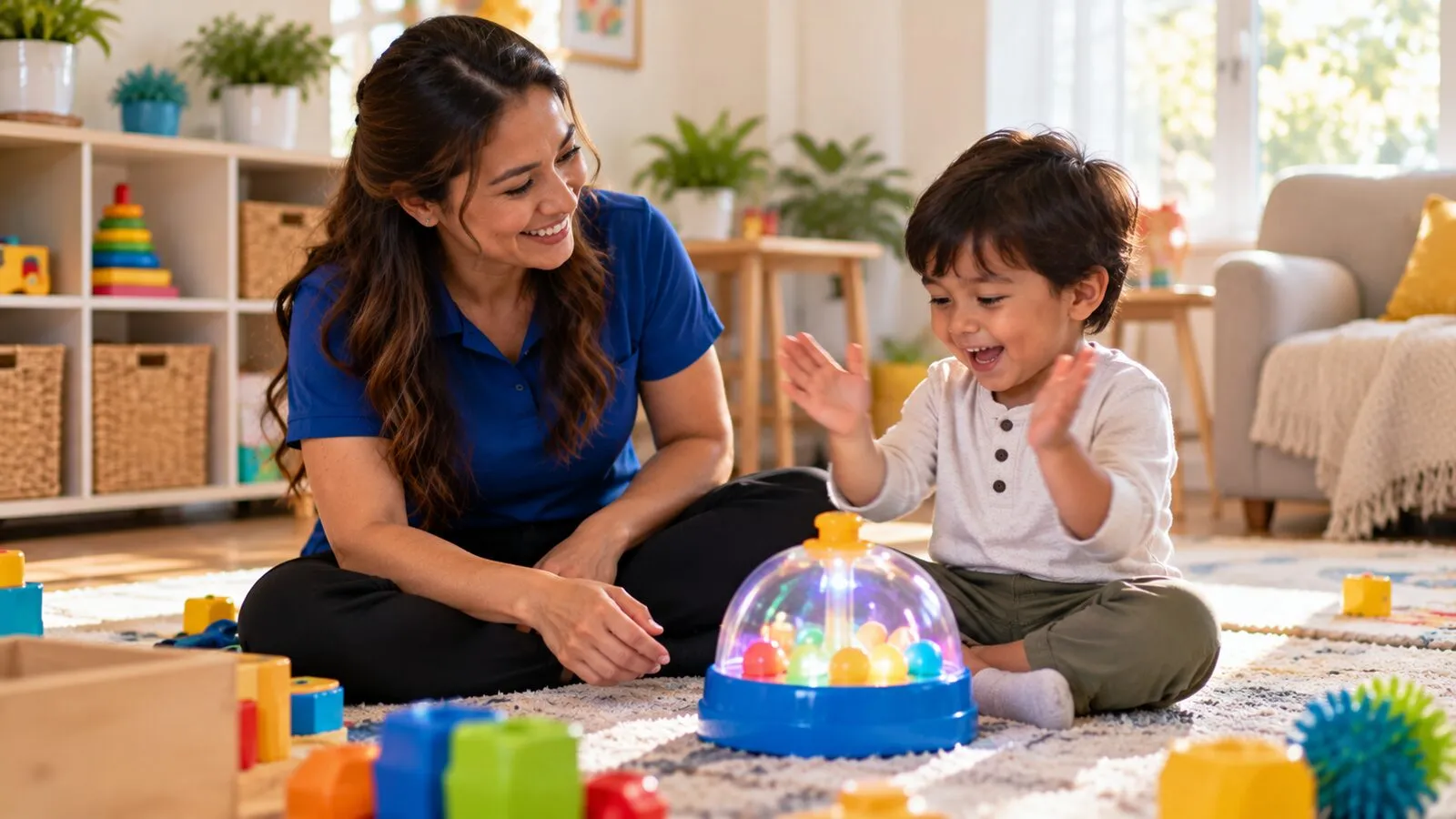
Much of modern ABA happens during play and daily activities. A therapist might teach colors while your child picks out cars, or practice requesting during snack time. The CDC describes one ABA-based approach, Pivotal Response Training, as taking place in a natural setting rather than clinic setting. Learning in real-life situations can help skills carry over to home, school, and the community.
Following your child’s lead
Therapists often start with what your child already loves, whether that is trains, bubbles, music, or jumping, and build learning around it. This keeps sessions motivating and helps your child enjoy the time.
Assent and dignity
Many providers now pay close attention to assent, meaning your child’s own signals that they are willing to take part. A child who turns away, cries, or pushes materials away may be saying “not right now.” A respectful therapist notices these signals, gives breaks, and adjusts the activity instead of pushing through. Your child should be treated with dignity in every session.
Parents as partners
Families are part of the team. Through parent training, a BCBA can show you how to use the same strategies during bath time, meals, or bedtime. This helps skills show up in real life, not just in therapy.
It is also fair to know that ABA has critics, including some autistic adults who describe harmful past practices. We cover these concerns, and what to watch for, in our article on whether ABA therapy is controversial.
Who is ABA therapy for?
ABA can support children with a wide range of needs and ages. Some children are toddlers who are just starting to communicate. Others are school-age kids who want to make friends or handle transitions better. Some teens work on independence skills like cooking, shopping, or managing a schedule.
The National Institute of Child Health and Human Development points out that there is no single best treatment for everyone, and that the most effective therapies and interventions are often different for each person. ABA may be one part of your child’s support, alongside speech therapy, occupational therapy, and school services.
If you are wondering about timing, see our guide on what age to start ABA therapy.
Every child is different, so talk with your pediatrician or a qualified professional about whether ABA fits your child’s specific needs.
Questions to ask when you are exploring ABA
When you talk to any ABA provider, these questions can help you understand how they work:
- Who will design my child’s program, and are they a BCBA?
- How often will the BCBA see my child and supervise the therapist?
- How do you choose goals, and how will I be involved?
- How do you use play and my child’s interests in sessions?
- How do you notice and respond when my child does not want to participate?
- How will you share progress with me, and how often?
A good provider will welcome these questions and answer them clearly.
How to get started with ABA in Orange County
The first steps usually look something like this:
- Talk with your child’s doctor. Your pediatrician can discuss your concerns and help with referrals, including for an autism evaluation if your child does not have one yet.
- Check your coverage. Many plans, including Medi-Cal, cover ABA therapy for children with an autism diagnosis. Our insurance page explains how we help families with coverage and authorization.
- Schedule a consultation. Meet with an ABA provider, ask questions, and learn what services might look like for your child.
- Start with an assessment. A BCBA gets to know your child and builds an individualized plan.
At United Autism Therapy in Westminster, we offer ABA therapy in our center, at home, and in schools across Orange County, along with parent training, speech and language therapy, and occupational therapy.
Talk with our team
If you are just starting to learn about ABA, you do not need to have everything figured out. We offer a free consultation where you can ask questions and talk through what might help your child. Call us at (714) 709-7819 or reach out through our contact page whenever you are ready.
Frequently asked questions
Is ABA therapy only for children with autism?
No. Applied behavior analysis is a broader science of behavior used in many settings. For children, though, ABA is most often used to support autistic kids, and many insurance plans, including Medi-Cal, cover it for children with an autism diagnosis when it is medically necessary.
Does my child need an autism diagnosis to start ABA?
For insurance to cover ABA, a diagnosis and a determination of medical necessity are usually required. United Autism Therapy does not diagnose autism, but our team can explain what paperwork your plan typically asks for and help you with the authorization process.
Will ABA change my child's personality?
It should not. Good ABA builds on who your child already is, using their interests and strengths to teach skills that make daily life easier. Goals should focus on communication, independence, and safety, not on making your child look or act like someone else.
How is ABA different from speech or occupational therapy?
Speech therapy focuses on communication and language, and occupational therapy focuses on everyday tasks, motor skills, and sensory needs. ABA uses behavior science to teach many kinds of skills and to understand why certain behaviors happen. Many children benefit when these therapies work together.
References
- About Behavior Analysis — Behavior Analyst Certification Board
- Board Certified Behavior Analyst (BCBA) — Behavior Analyst Certification Board
- Registered Behavior Technician (RBT) — Behavior Analyst Certification Board
- Treatment and Intervention for Autism Spectrum Disorder — Centers for Disease Control and Prevention
- What are the treatments for autism? — Eunice Kennedy Shriver National Institute of Child Health and Human Development
This article is for general education and is not medical advice. Every child is different — please talk with your child’s pediatrician or a qualified professional about your child’s needs. Read our medical disclaimer.