Center-Based vs. In-Home ABA Therapy: Which Setting Fits Your Child?
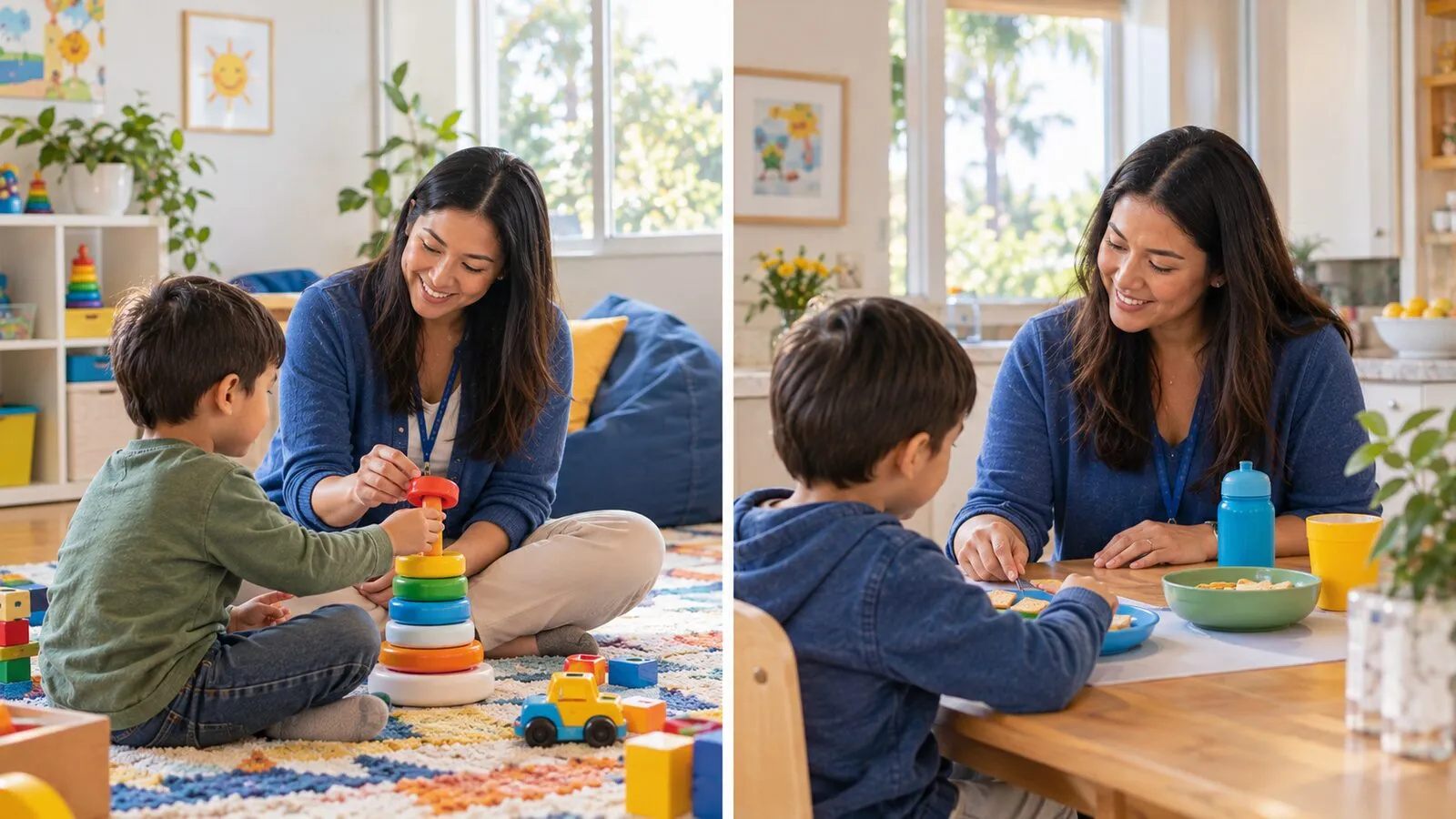
The main difference between center-based and in-home ABA is where learning happens. Center-based ABA takes place in a therapy setting built for learning, with materials, clinical staff, and often other children nearby. In-home ABA takes place in your child’s everyday environment, built around real routines and family life. Neither is better for every child; the right choice depends on your child’s goals, needs, and your family’s schedule.
Key takeaways
- Center-based ABA often offers more structure, more peer interaction, and on-site supervision.
- In-home ABA makes it easier to practice skills in real routines and involve the whole family.
- Many families use a hybrid plan, and the mix can change as goals change.
- School-based ABA is a third option focused on classroom and playground skills.
- Your child’s BCBA should recommend a setting based on assessment, not convenience alone.
Why the setting matters in ABA therapy
ABA is built around your child’s individual goals. The NICHD notes that there is no single standard treatment for autism and that care should be individualized. The American Academy of Pediatrics’ clinical report on autism also reviews a range of behavioral and developmental approaches used with young children. The setting is one of the tools a team uses to fit therapy to your child.
The setting shapes which skills are easiest to practice. A child learning to join a group activity needs other children around. A child learning to get dressed or sit through dinner benefits from practicing those skills where they actually happen.
Setting also affects generalization, which means using a skill in new places, with new people, and in new situations. A skill that only shows up in one room with one therapist is not yet fully learned. Good programs plan for generalization no matter where therapy starts.
Center-based vs. in-home ABA at a glance
| Factor | Center-based ABA | In-home ABA |
|---|---|---|
| Environment | Structured therapy space with materials chosen for learning | Your child’s home, with familiar toys, rooms, and routines |
| Social opportunities | Often other children nearby for turn-taking, sharing, and group play | Mostly siblings and family members, unless outings are planned |
| Generalization | Skills may need planned practice at home and in the community | Skills are practiced in real routines, but may need practice in new places |
| Family involvement | Parents join check-ins, observations, and parent training | Family members are often present and can join in during sessions |
| Schedule and logistics | Requires drop-off and pick-up; set hours at the center | No commute for your child; requires space and an adult at home |
| Distractions | Fewer home distractions, but a busier space with other children | Familiar comforts, but also TVs, siblings, pets, and interruptions |
| Supervision | BCBAs and other clinical staff are often on site | BCBA visits are scheduled; supervision may happen during home visits |
This table shows general patterns, not rules. A well-run home program can include lots of social practice, and a good center can closely mirror home routines.
Benefits of center-based ABA therapy
Center-based ABA can be a strong fit for many children, especially those preparing for preschool or school.
Built-in social opportunities
One of the biggest benefits of center-based ABA is access to peers. Children can practice sharing toys, waiting in line, joining circle time, and playing simple games with other kids, all with support.
A learning-ready environment
Centers are set up for therapy. Materials are organized, rooms are designed to reduce certain distractions, and spaces can be arranged for specific skills like table work, gross motor play, or snack routines.
On-site clinical support
At a center, BCBAs are often nearby, which can make it easier for them to observe sessions, coach therapists in the moment, and adjust plans quickly. A BCBA can supervise the RBTs and other staff who carry out your child’s program.
A school-like routine
Getting ready, arriving, separating from a parent, and following a schedule are skills in themselves. For many children, the routine of going to a center is good practice for school.
Access to related services
Some centers offer other services in the same place. At United Autism Therapy, families can also ask about speech and language therapy and occupational therapy, which can make coordination easier.
Our center-based ABA program is located at 13571 Beach Blvd in Westminster.
Benefits of in-home ABA therapy
In-home ABA brings therapy into your child’s real life, which has clear advantages for some goals and families.
Skills practiced where they are used
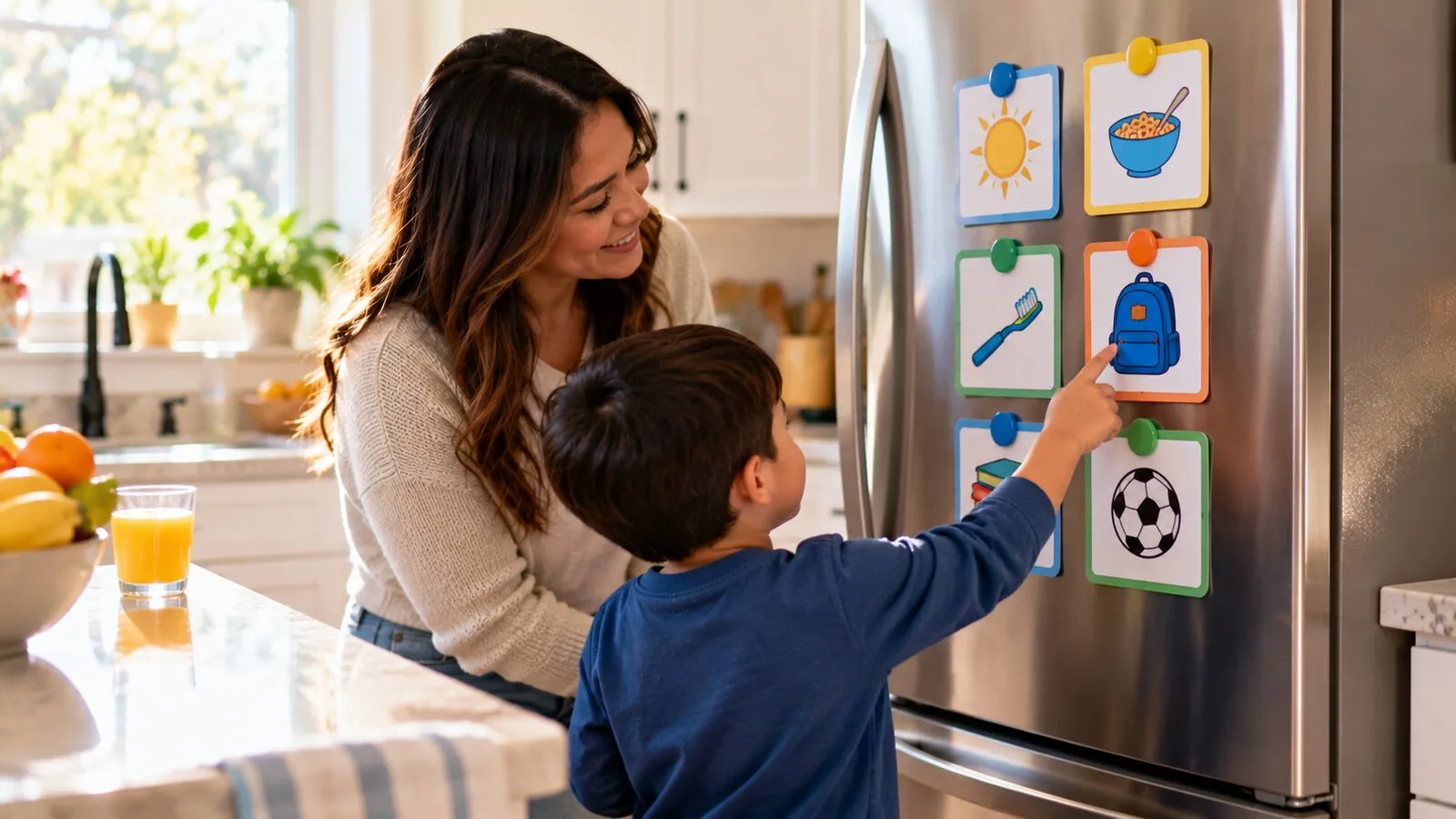
At home, therapists can work on the exact routines that are hard for your family: getting dressed, brushing teeth, mealtimes, bedtime, or playing with a sibling. Behavioral approaches look closely at what happens before and after a behavior, and home is where many of those everyday patterns happen.
Easier family involvement
When therapy happens at home, parents and caregivers can watch, ask questions, and practice strategies right away. Siblings can join sessions too, which helps the whole family use the same approach.
Comfort and familiarity
Some children feel more relaxed at home, especially very young children or those who find new places overwhelming. A calmer child is often more ready to learn.
Less travel
In-home ABA removes the commute for your child, which can help families with busy schedules or limited transportation. Keep in mind that it does require a suitable space and usually an adult at home during sessions.
United Autism Therapy offers in-home ABA across Orange County.
Possible drawbacks of each setting
Every setting has trade-offs. Being honest about them helps you choose well.
Center-based ABA may be harder when:
- Travel time is long or transportation is not reliable.
- Your child’s main goals are tied to home routines, like sleep or toileting, that need practice at home.
- Your child needs time to adjust to new places and people before they can learn comfortably.
In-home ABA may be harder when:
- Your home is busy or has limited quiet space for learning.
- Your child’s goals focus heavily on peer interaction.
- Your child strongly associates home with free time and finds it hard to switch into learning.
None of these rule out a setting. They are things to talk through with your child’s BCBA.
Who each setting may suit
These are general patterns, not rules. Your child’s assessment should guide the decision.
Center-based ABA may suit children who:
- Are getting ready for preschool or kindergarten and need group and classroom-style skills.
- Enjoy being around other children or need structured practice with peers.
- Do well with a consistent routine outside the home.
In-home ABA may suit children who:
- Have goals centered on daily living routines at home.
- Are very young or find new environments overwhelming at first.
- Have families who want hands-on coaching in the home.
Your family may lean one way if:
- Your work schedule makes drop-off hard, or makes having someone home during sessions hard.
- Your home has, or lacks, a space where your child can focus.
Hybrid models: combining settings
Many families do not pick just one. A hybrid plan might include center-based sessions on some days and in-home sessions on others.
For example, a child might attend the center to work on peer play and following group directions, while in-home sessions focus on mealtime and bedtime routines. The BCBA writes one plan and uses each setting for the goals it supports best.
Hybrid plans can also help with generalization. When your child uses a skill both at the center and at home, with different people, it is more likely to become part of daily life.
The mix can shift over time. A family might start mostly at home, then move toward center-based sessions as the child builds comfort and gets closer to school age.
Where school-based ABA fits in
School-based ABA is a third option. It focuses on skills your child needs in the classroom, such as following group instructions, participating in activities, moving between tasks, and interacting with classmates.
School-based support usually involves coordination with teachers and the school team. It can work alongside home or center sessions. United Autism Therapy offers school-based ABA programs across Orange County.
Tips for a smooth start in either setting
Whichever setting you choose, the first few weeks set the tone. A few simple steps can help.
If you start at a center:
- Visit together before the first session, if the provider allows it, so the space feels familiar.
- Keep drop-off short and warm, and follow the same goodbye routine each time.
- Ask for a quick summary at pick-up so you know what to reinforce at home.
If you start at home:
- Choose a regular spot for sessions with a little floor space and a small table, away from the TV if possible.
- Put a few toys out of sight so they stay special for therapy time.
- Let siblings know what to expect, and ask the therapist when they can join in.
In both settings:
- Share your child’s favorite toys, snacks, and shows with the team before day one.
- Expect the first sessions to focus on building trust through play.
- Ask how you will learn the strategies being used, since carryover between settings depends on it.
Questions to ask when choosing a setting
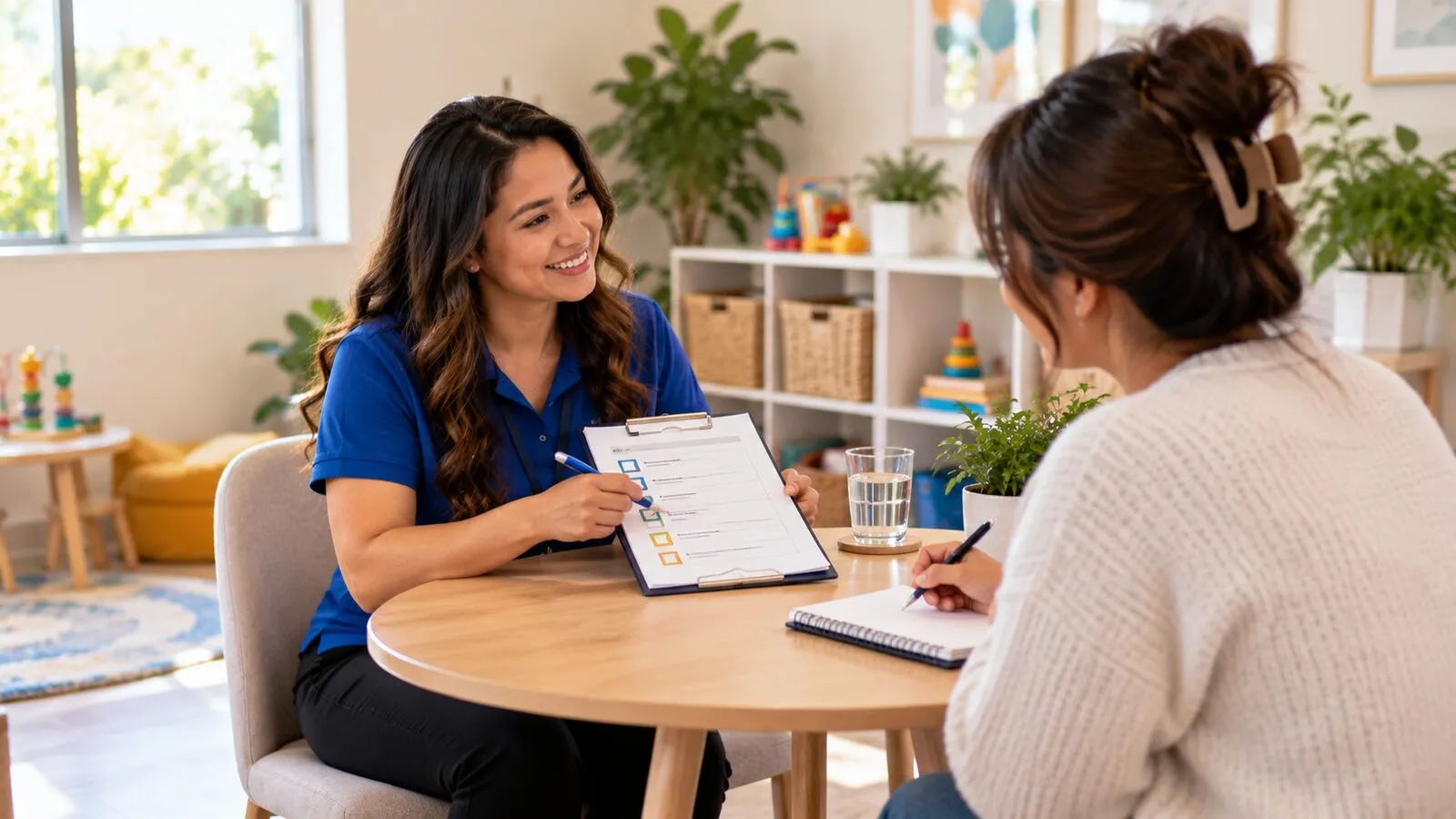
Bring these questions to your consultation or your child’s BCBA:
- Which setting do you recommend for my child’s current goals, and why?
- How will you help my child use new skills in other places?
- How often will a BCBA observe sessions in this setting?
- What will my role be during sessions?
- What happens if this setting is not working well for my child?
- What does my insurance plan authorize, and does it differ by setting?
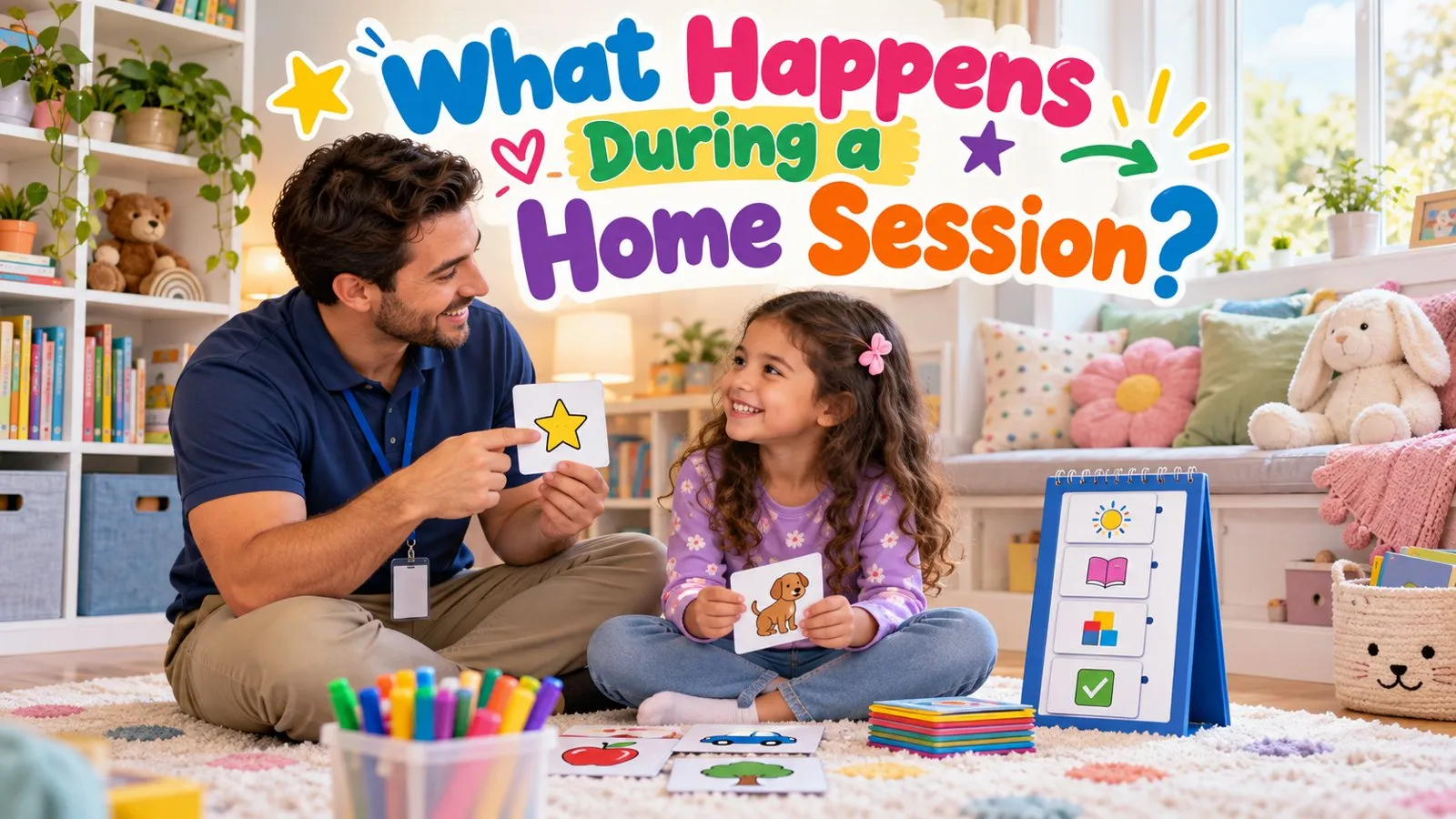
For a full checklist, see our guide on how to choose an ABA provider. To picture what an actual session might look like, read what happens in an ABA therapy session.
Every child is different. Talk with your pediatrician or a qualified professional about your child’s specific needs and which services make sense.
Talk with our team about the right setting
If you are weighing center-based and in-home ABA, we can help you think it through. We offer a free consultation to talk about your child’s needs, the settings we offer, and how coverage and authorization work. Call (714) 709-7819 or reach out to our team whenever you are ready.
Frequently asked questions
Is center-based ABA more effective than in-home ABA?
Neither setting is better for every child. What matters most is whether the setting fits your child's goals, the quality of the program, and how well skills carry over into daily life. Your child's BCBA can explain which setting they recommend and why.
Can my child switch from in-home to center-based ABA later?
Often, yes. Families sometimes start in one setting and move to another as goals change, for example shifting toward a center to build peer skills before preschool. A change of setting may need updated authorization from your insurance plan, so ask the team to help plan the timing.
Do I have to be home during in-home ABA sessions?
Most in-home programs require a parent or another responsible adult to be home during sessions. Providers set their own policies, so ask about this before you start. Being nearby also gives you a chance to learn strategies you can use between sessions.
Does insurance cover both center-based and in-home ABA?
Coverage depends on your plan and your child's authorization. Many plans, including Medi-Cal, cover ABA therapy for children with an autism diagnosis when it is medically necessary. Our team can help you understand what your plan authorizes.
References
- Treatment and Intervention for Autism Spectrum Disorder — Centers for Disease Control and Prevention
- What are the treatments for autism? — Eunice Kennedy Shriver National Institute of Child Health and Human Development
- Identification, Evaluation, and Management of Children With Autism Spectrum Disorder — American Academy of Pediatrics
- Board Certified Behavior Analyst (BCBA) — Behavior Analyst Certification Board
This article is for general education and is not medical advice. Every child is different — please talk with your child’s pediatrician or a qualified professional about your child’s needs. Read our medical disclaimer.